
As of today, June 27th, 2024, the Faroese language has been added to Google Translate, one of some 100 new languages! The Faroe road network has also been accessible on Google Street View for several years now.
When I first became interested in the Faroes, way back in 2006-2009, such a robust web presence would have been hard to imagine. But some fifteen years and and two brilliant marketing campaigns by Visit Faroe Islands later, the islands and their language are fully online.
From Sheep View 360 to Google Street View
For Sheep View 360, launched in 2016, several sheep were fitted with cameras and sent out to capture stunning views… and the attention of Google. The campaign was wildly successful on every front. The story captured the attention of media outlets worldwide, showcasing the islands’ beauty to millions of potential visitors. According to a Washington Post Article, ‘How sheep with cameras got some tiny islands onto Google Street View‘, Google called the project “shear brilliance” and assisted with the non-traditional mapping efforts before sending out the Google Street View Van the next year.
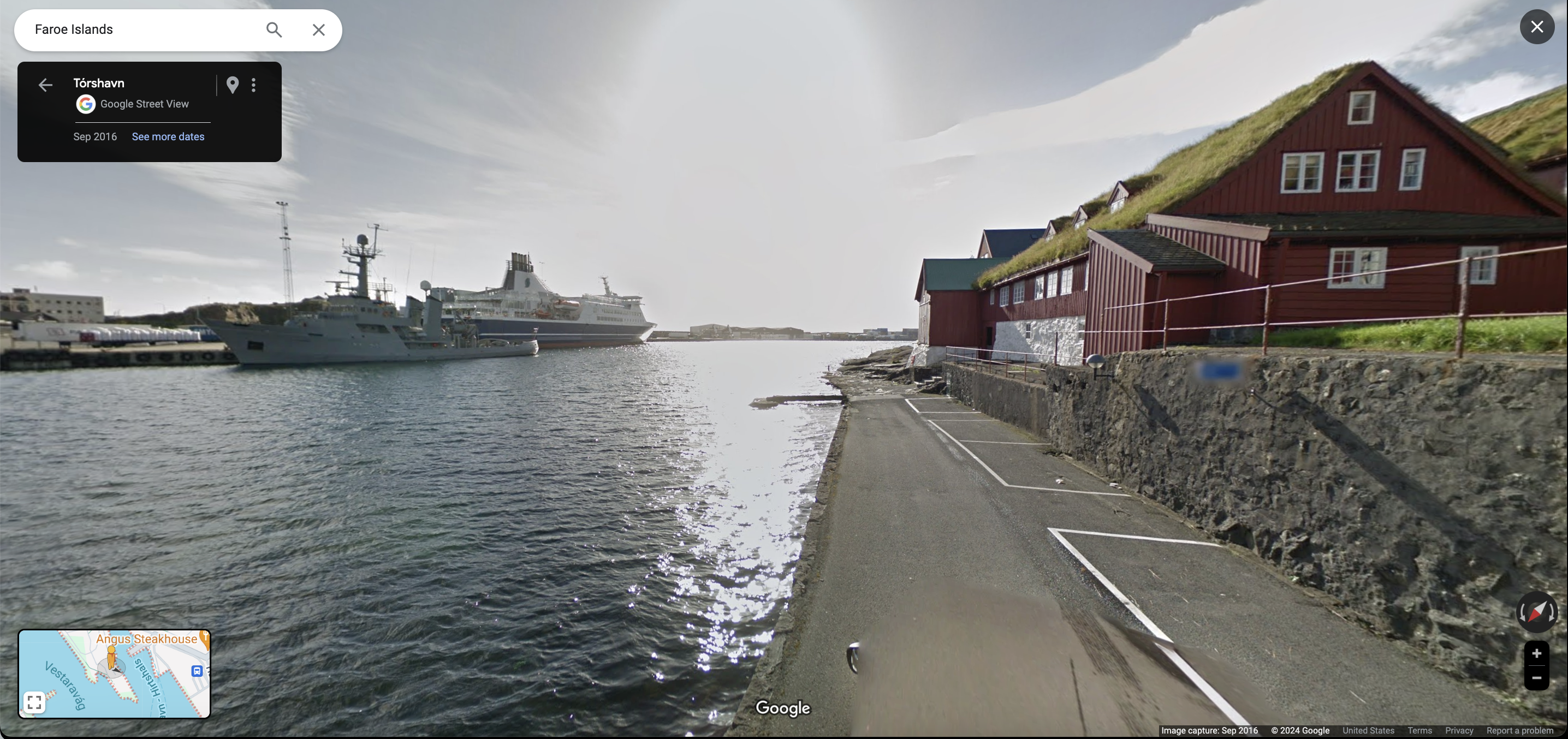
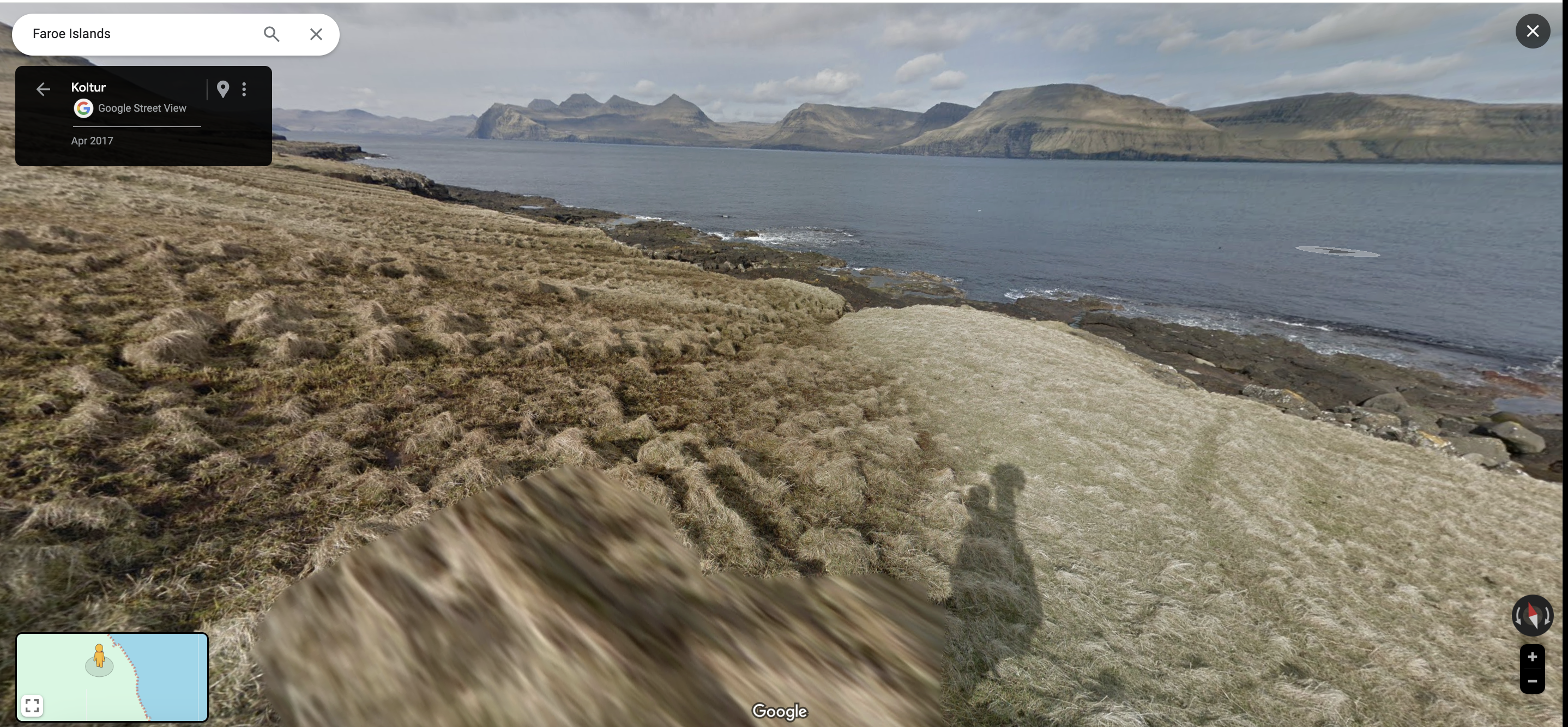
Today, nearly the entire country has been mapped by Google Street View. You can explore the old area of Tórshavn, the Faroese capital, as well as the twists and corners of tiny villages. It seems the Google truck made it everywhere you can take a vehicle, and then some — even the remote islands of Koltur and Fugloy have ‘street view’ paths you can follow through the mountains.
From Faroe Islands Translate to Faroese on Google Translate
Today’s big news is that Faroese is now available on Google Translate!
This also followed a Visit Faroe Islands initiative, Faroe Islands Translate, back in 2017, in which Faroese people could upload recordings in response to translation requests.

I tried out Google Translate for Faroese this morning. My test of Faroese > English seemed quite accurate:

On the other hand, when I tried English > Faroese, I got some very Icelandic looking nonsense:

Strangely, adding in the comma that should properly be in the English sentence seemed to return a much better result:

Well, it’s only the first day, and I’m sure there are still some bugs to be worked out.
Once they are, it will be interesting to see how having a free translation service for Faroese changes the position of the language, particularly online. Until now, for example, there has essentially been no spam in Faroese. If you saw a message in Faroese, you could essentially assume it was genuine and that the person writing it actually knew the language. This will no longer necessarily be the case going forward.
At any rate, this is an exciting day for the many Faroese people who looked forward to being able to use Google services for their own country and language!

 Adventures in the Land of Maybe