Category Archives: Modern Life in the Faroes

A Weekend in Suðuroy

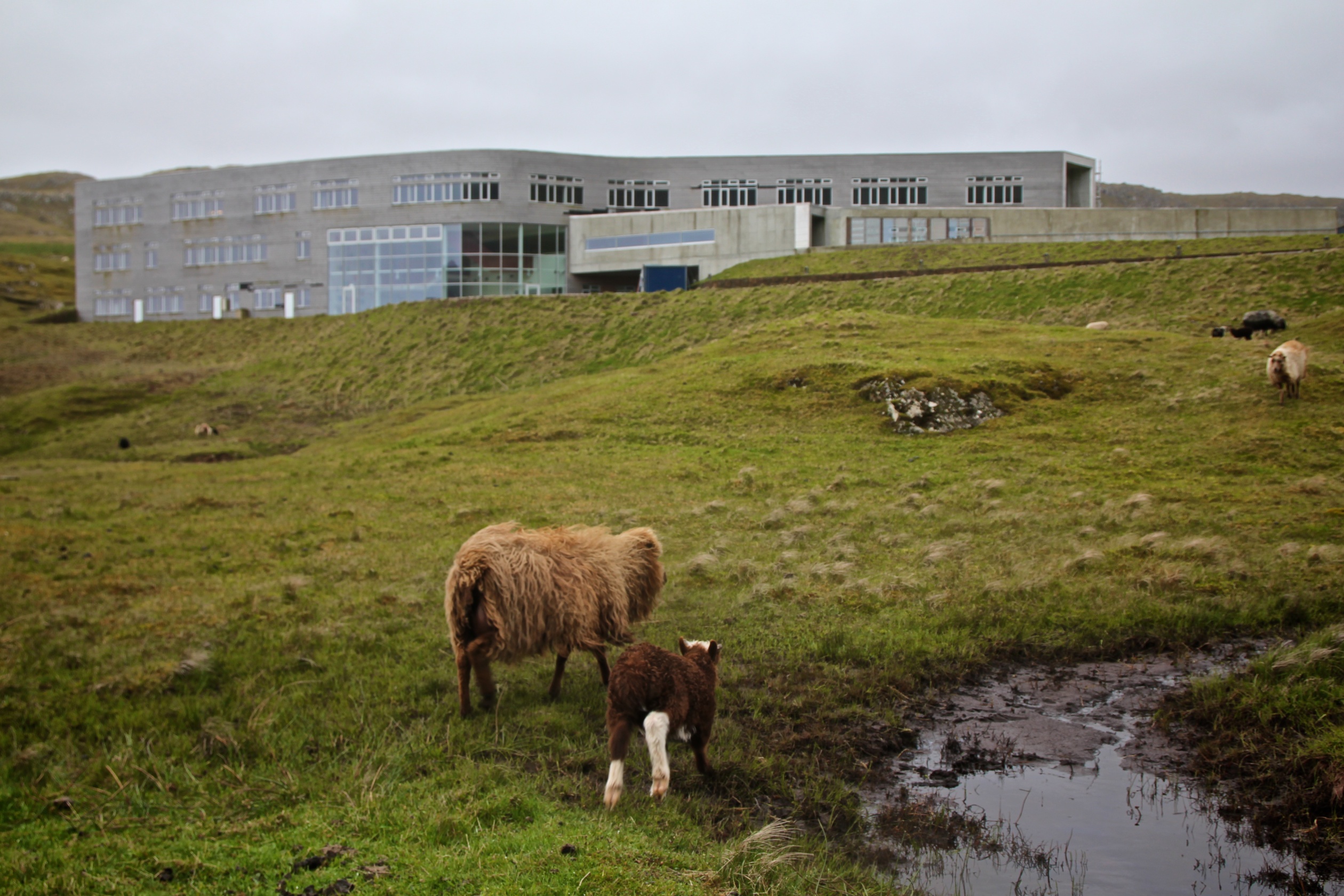
Sheep graze beside Skúladepilin í Suðuroy, which serves as the island's high school and a  school for health professionals. The school opened in 2009 and has been a rare new construction on an island that continues to experience population loss.

Sheep graze beside Skúladepilin í Suðuroy, which serves as the island’s high school and a school for health professionals. The school opened in 2009 and has been a rare new construction on an island that continues to experience population loss.

I spent my first weekend in the Faroe Islands on the island of Suðuroy, the southernmost island in the Faroe Islands. Suðuroy interests me because it is on track to become the only large island not connected to the others by undersea tunnel. Getting to Suðuroy still entails, and may always entail, a helicopter or a two-hour ferry ride. Largely due to its isolation, Suðuroy has been losing population for several years and has now fallen below 5,000 inhabitants.

I went to Suðuroy for the 70th birthday party of a relative of my host family. I was also able to visit a small local festival in honor of a 130-year-old fishing boat and go out to the local pub one evening.  It was great to have such an intimate look at the island’s special culture.

Vágur: A child plays on the Johanna TG 326 during the celebration of the boat's 130th birthday.

Vágur: A child plays on the Johanna TG 326 during the celebration of the boat’s 130th birthday.
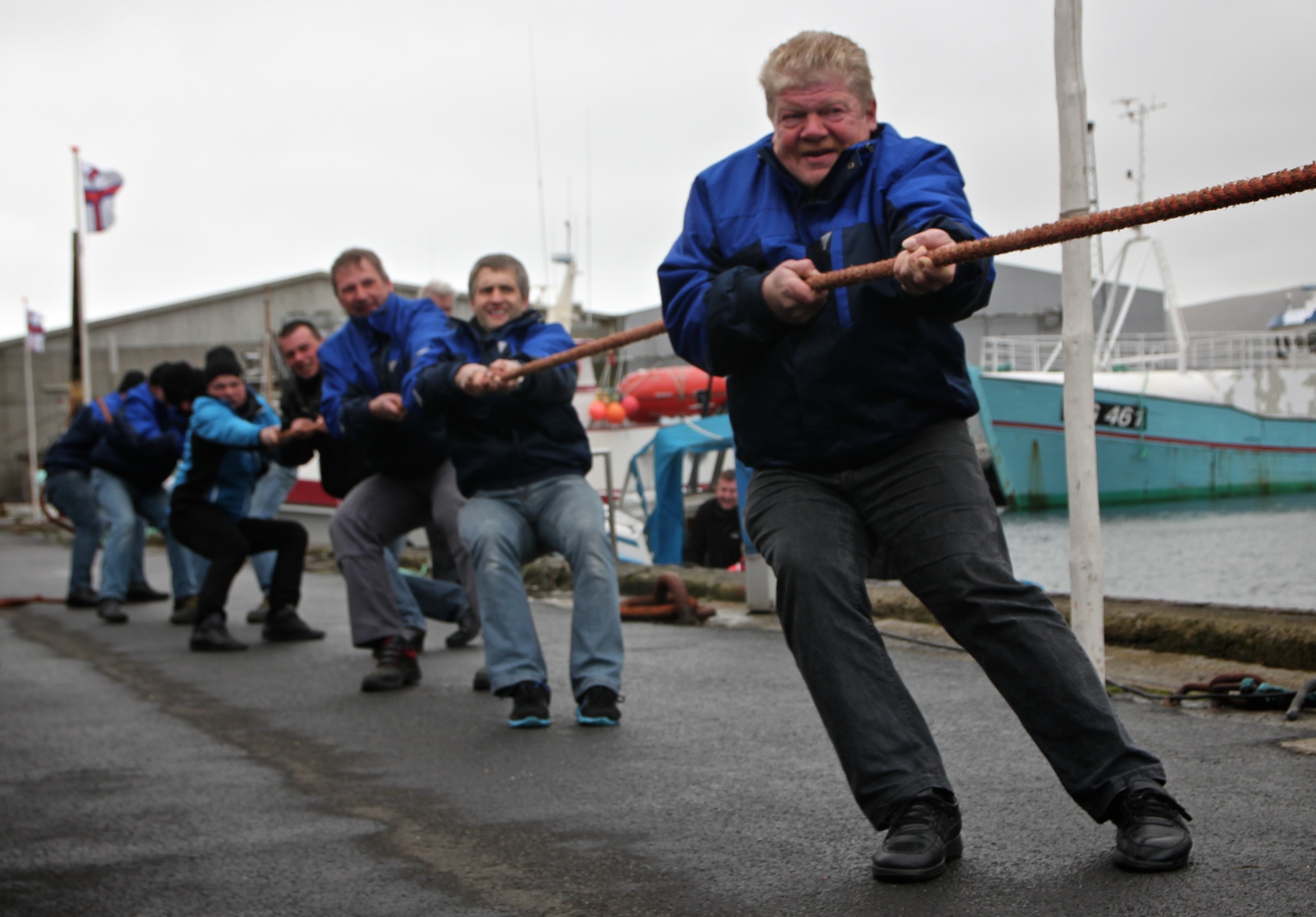
Tug of War is serious business at a boat's birthday party in the village of Vágur on Suðuroy.

Tug of War is serious business at a boat’s birthday party in the village of Vágur on Suðuroy.

Holding a heimalamb, a lamb raised at the farmer's home because its mother didn't want it. Cute, right?

Tvøroyri: Holding a heimalamb, a lamb raised at the farmer’s home because its mother didn’t want it. Cute, right?

People from Suðuroy have a distinctive accent and are known for being loud, friendly, and a little bit provincial. In my experience, the first two were definitely true. As for the third, well, I can only relate that when I went to a gas station and asked to use the bathroom, they answered “Yes, of course, if you don’t mind going down some stairs…” and promptly opened a trapdoor with a ladder leading to a toilet in the basement!

Suðuroy’s nature is a little different than that in the rest of the Faroe Islands. To my eyes, there are fewer mountain peaks and more sheer seaside cliffs. Suðuroy is the only one of the Faroe Islands to have had coal mines, one of which is still active. Basalt rock formations can be seen in several places, and the waters around Suðuroy wash no fewer than 262 islets and skerries. In addition to the picturesque villages, visitors often come to Suðuroy to visit its caves or the scenic point at Eggjarnar, from which there are astonishing views of sea-cliffs both north and south.

The sea-cliff view from Røðin.
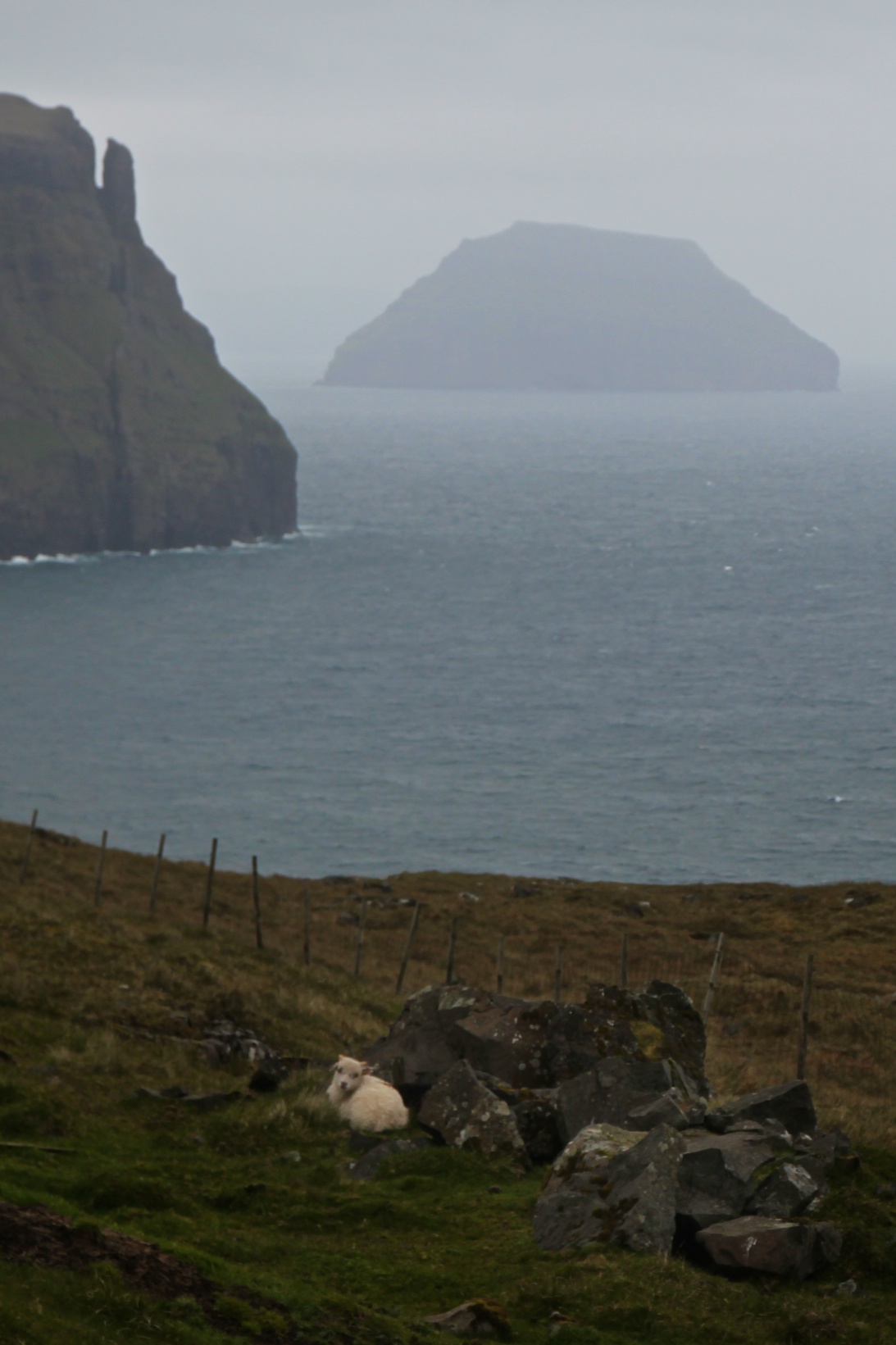
The sea-cliff view from Røðin.

A lamb sleeps on Suðuroy, in view of seacliffs and the island of Lítla Dímun.

A lamb sleeps on Suðuroy, in view of seacliffs and the island of Lítla Dímun.

Tvørgjógv and Ásmundarstakkur in the north of Suðuroy.

Tvørgjógv and Ásmundarstakkur in the north of Suðuroy.

Hálsgjógv and tidal pools near Tvøroyri.
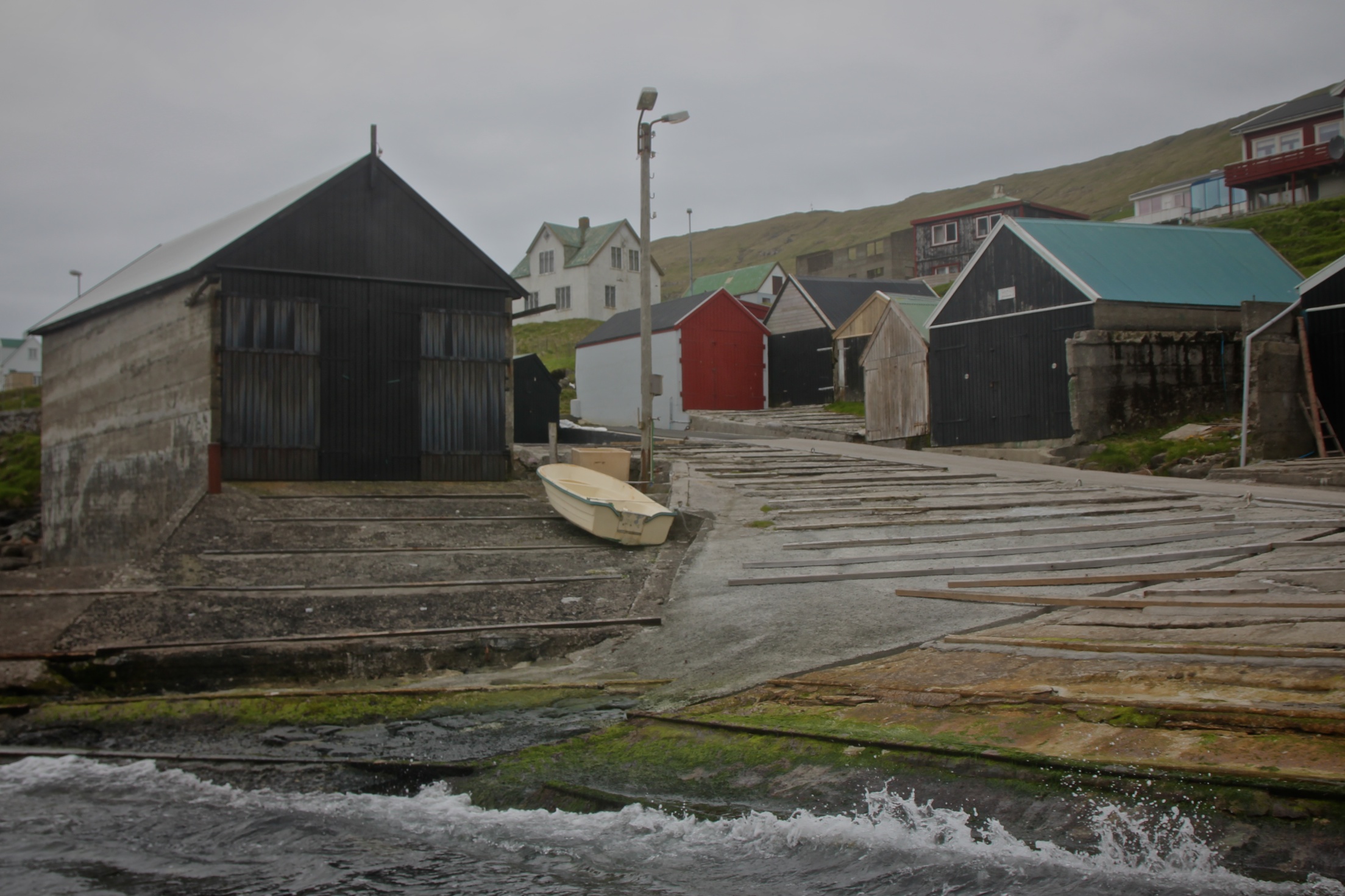
Hálsgjógv and tidal pools near Tvøroyri.

Sandvík, the northernmost village on Suðuroy and the spot where saga hero Sigmundur washed up from the sea to meet his death.

Sandvík, the northernmost village on Suðuroy and the spot where saga hero Sigmundur washed up from the sea to meet his death.

I hope to return to Suðuroy during the course of my project. The island is of great touristic interest for its lovely, unique nature and the way it represents a throwback to life in the Faroes before undersea tunnels connected “the Faroese mainland.” In addition, Suðuroy is still home to about a tenth of the Faroese population, and, as I know some people there now, I think it will be a good place to get to understand the lives and perspectives of the women living in more remote parts of the Faroe Islands. This weekend was a good first visit and I look forward to returning.

Passengers doze off on Smyril, the two-hour ferry that connects Suðuroy to Tórshavn.

Passengers doze off on Smyril, the two-hour ferry that connects Suðuroy to Tórshavn.

Learning to Drive in the Faroe Islands

The sunset from the Old Mountain Road from Gøta to Leirvik.

The sunset from the Old Mountain Road from Gøta to Leirvik.

We parked on the old mountain road, where sheep and lambs frolicked beneath us as the sun set on the sea between the islands. Unfortunately, I wasn’t there to enjoy the view. I was there to learn to drive.

As I processed that information, the scene seemed to shift from idyllic to terrifying before my eyes. The narrow road angled down, steeply to my eyes, and with a slight but definite curve on top of that. To the left of the road was mountain, to the right, a little guardrail all that stood between us and the sea. I felt dizzy just thinking about getting behind the wheel — and that wasn’t even factoring in the obstacle course: a couple walking on the side of the road, the lambs crossing here and there at will, the trawling lines laid out for reorganization just a bit farther ahead.

Trawling lines laid out for reorganization on the Old Mountain Road between Gøta and Leirvik.

Trawling lines laid out for reorganization on the Old Mountain Road between Gøta and Leirvik.

“I can’t do this,” I said. “Isn’t there some place flatter?”

“What?” said my friend Uni. “This is flat!”

“…”

“This is where I learned to drive!” he continued.

“Great, you are a superior human being,” I said, swallowing my pride for once in my life. “I can’t drive here. Not the first time.”

The harbor, then. Late at night. The closest thing the Faroes had to the huge, flat, empty church parking lot where I’d first learned to drive automatic almost a decade ago. Here, there was just barely enough room to get up to third gear before having to turn before we went into the ocean. Perfect.

Bitstrips Driving

Silly Foreigner Miranda

Being a foreigner is a lot like being a child. Everything is fresh, new, exciting, fun… and humbling. Here in the Faroe Islands, all I do is learn; sometimes at the level of a preteen, sometimes a toddler. I don’t know how to speak their language, drive their cars (especially on their mountains and through their rough-hewn, one-lane tunnels), or knit a scarf (much less a beautiful Faroese sweater).

Everyone here is incredibly kind and patient. They’re willing to speak to me slowly, switch to Danish or English at my slightest hesitation (btw, guys, I know you’re doing that with good intentions, but it doesn’t always help), spend hours explaining everything to me and even let me practice stalling their car in the harbor.

They worry about me, this stranger in their strange, treeless world. Sometimes their concerns are well founded. Sometimes, like when I’ve been told for the thousandth time that if I take one vertical step up a mountain in bad weather, I will fall off a massive cliff and die, I feel a little bit patronized. Then I hear that that happened to a Faroese girl, just last week. So I shut up and try to listen.

Bitstrips Cliff

I’m still getting used to the weather here. The wind sometimes sounds like it’s trying its hardest to take down the house, late May is still not summer, 55 degrees is considered a heat wave, and there are a hundred kinds of fog — with different words for all of them. There’s dark, gloomy fog and fog as white and bright as snow. There’s fog mixed with rain and fog that parts to let the sun shine through in patches. There’s fog so thick I can barely see up the road, fog that seals in the top of our valley like a tupperware lid, fog that decorates just the peaks of the mountains like cupcake frosting.

Bitstrips Fog

Though most of the time I feel a bit like a child, I do have my moments of triumph. I’m an exciting travelling hillbilly, after all, with my redneck accent in the ready for entertaining at parties. I can cook exotic and delicious dishes! My time in Norway made me into a reasonably experienced and fit hiker. Despite my feelings of inadequacy, most people here are happy that I can say anything at all in Faroese.

And last week, although I was a little late to the pier-jumping party, I’d like to think I did America proud with my sjóvarlop into the Faroese sea! 🙂

My Life in Norðragøta

The stream going past my house in Norðagøta...

The stream going past my house in Norðragøta.

I have now been in the Faroe Islands for just over a week. It feels like much longer (in the best possible way). Though I am just getting started with my journalism work and research, it’s been a very busy week as I’ve adapted to my new lifestyle.

My situation could not be any better. I am staying with an incredibly friendly family who include me in all of their activities and love helping me to learn the Faroese language and the culture. A lot of my time this week has been spent doing things with them, from making a late mother’s day breakfast to going to the extended family knitting club. I have been settling in to the routines of the house, and just like anyone else, I wash dishes, cook meals and take out the dog, Lolli. Even during the day, when most of the others are working, I am never lonely. Eight people live in this house, and other relatives and friends drop by regularly as well, coming and going at all hours.

My room here in Norðagøta

My bedroom and puppy for the summer!

My village, Norðragøta, is a beautiful and very old village with a central location on the main bus route and road between the two biggest Faroese towns, Tórshavn and Klaksvík. Though I ended up here by chance, I couldn’t have picked a better place to live.

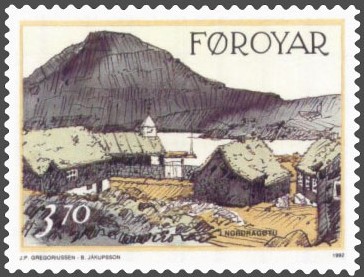
A Faroese Stamp featuring Húsini hjá Peri, the old part of Norðragøta with its lovely turf roofs.

A Faroese Stamp featuring Húsini hjá Peri, the old part of Norðragøta with its lovely turf roofs.

Norðragøta has a population of 550, and the larger “Gøta” area, which comprises Norðragøta as well as Gøtueiði, Gøtugjógv and Syðrugøta, is home to just over 1,000. By Faroese terms, that’s right in the middle — not a booming metropolis like the capital (population 12,500), nor one of the many tiny, remote villages. I can walk to a small grocery store, a gas station, a soccer stadium, a fairly large and modern church and several other commodities, but the village still has a friendly and relaxed bucolic feeling.

Horses and mountains from my window in Norðagøta.

Horses and mountains from my window in Norðragøta.

Wherever you are, you can hear the crying of the gulls and the bleating of the sheep. From my window, I can almost always see children playing in the stream, dogs walking around freely on the roads and even a few horses, who are allowed to graze in alternating yards and fields and confined only by portable rope fences that are moved every few days.

The Faroe Islands in Vertical: Here you can quickly see the difference between the Bøur, or infield, and the Hagi, or outfield, where sheep are kept in different seasons.

The Faroe Islands in Vertical: Here you can quickly see the difference between the Bøur, or infield, and the Hagi, or outfield, where sheep are kept in different seasons.

Norðragøta is quite a typical Faroese village situated, like everything in the Faroes, on narrow bits of almost-flat land between the mountains and the sea. Things are arranged almost vertically here — the sea; the beach and the harbour; the fish factory; the houses and businesses; the infield; the outfield; the cliffs; the mountain-top fog; the sky — are all stacked like layers of coloured sand in a jar.

Gøta also has a few special distinctions. It is the home of Eivør Pálsdóttir, one of the most famous Faroese singers, and the annual G! Music Festival. Gøtuvík is one of the largest bays in the Faroes, and the Stóragjógv cleft that empties into it is the largest such canyon on the islands.

Traditional Faroese church in Norðagøta

Traditional Faroese church in Norðragøta, complete with turf roof.

Gøta also features prominently in the Faroe Islander’s Saga, or Færeyingasaga, as one of the main characters, the heathen Viking chief, Tróndur í Gøtu, had his farm right here! In the oldest part of Norðragøta, there are several turf-roofed houses, a 200-year-old traditional Faroese church, and a living-history museum at the old house Blásastova, where my host family’s ancestors lived.  This is one of the best places in the islands for visitors to experience what Faroese village life was like not so long ago.

Norðragøta already feels like home to me. I’m very excited to spend the summer here!

What am I doing in the Faroe Islands?

My name is Miranda Metheny, I’m an American girl from the Missouri School of Journalism, and I’ll be spending this summer in the Faroe Islands to do my master’s project.

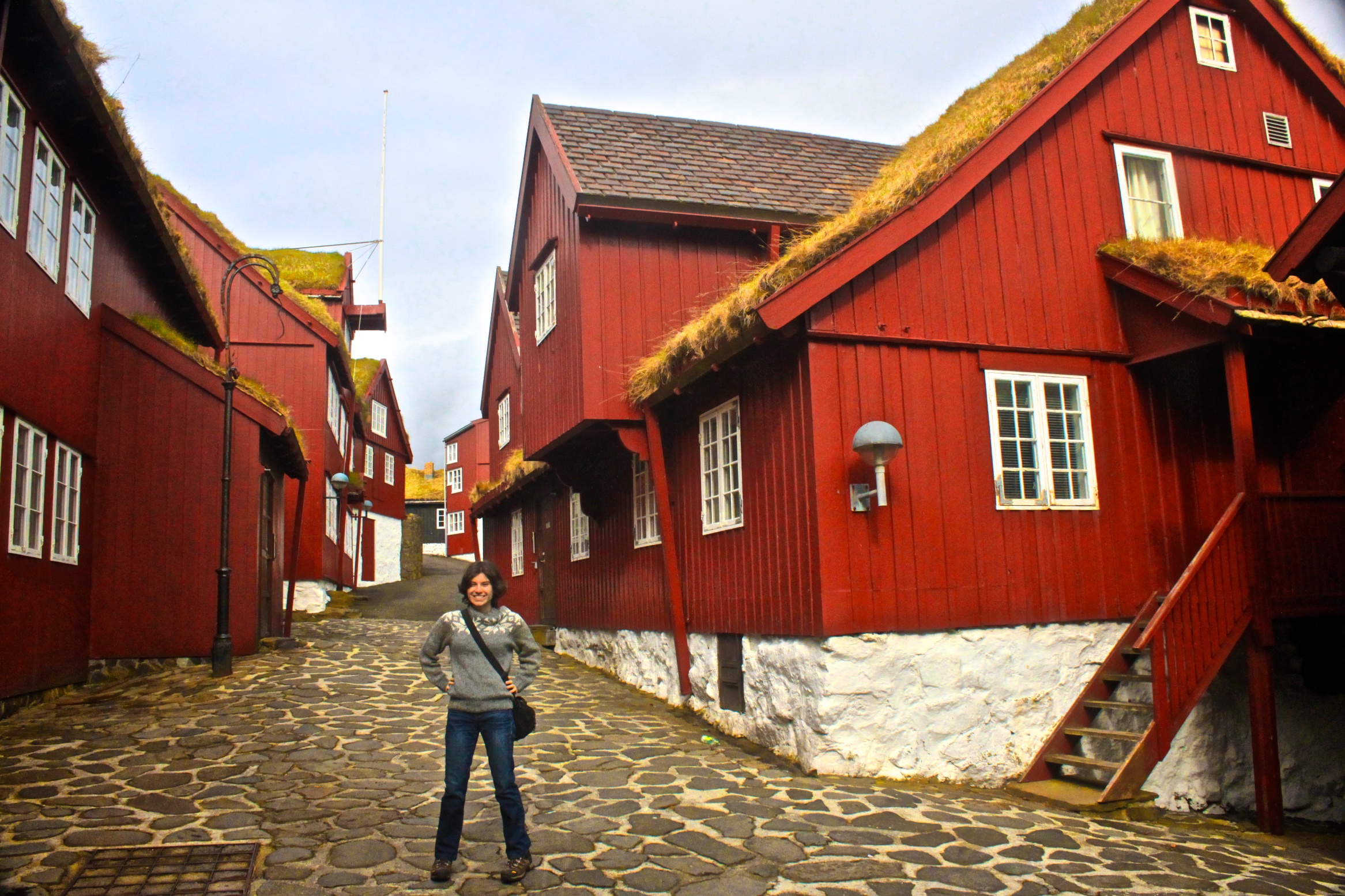
The Old Town of Tórshavn, the capital of the Faroe Islands.

The Old Town of Tórshavn, the capital of the Faroe Islands.

I first visited the Faroe Islands for a short visit in 2012. I was overwhelmed by their unique beauty and culture — simply put, it was the most remarkable and fascinating place I had ever been.

When I went home, I read everything I could get my hands on about the Faroe Islands. Unfortunately, I found that most foreign articles about the islands were based on short stays, were structured along stereotypical lines and exotified the place by focusing more on the extremes (such as the more remote islands) and on the past than on the complex and modern society most Faroe Islanders now live in. In short, they framed the Faroe Islands in certain limited ways that left out a lot of the reality I had experienced, even briefly.

When it came time to finish my master’s degree at the University of Missouri with one final journalism project, I saw my chance to come back to this amazing place. I’ll be here until August, learning the Faroese language and experiencing the culture from as many angles as possible.

For my project, I will be taking photographs and writing articles about travel and cultural topics such as Faroese music and food, as well as the lives of young women here. That last topic is especially interesting to me as I fall within the demographic (except for the “Faroese” part, of course), the Faroe Islands are currently experiencing a disproportionate shortage of women, and the coverage I have seen of this issue has been especially prone to framing and stereotyping. I’ll also interview Faroese people about stereotypes, cultural identity, and the representation of the Faroes in foreign media.

I hope you will enjoy following my adventures in the amazing “Land of Maybe” (so called because little is certain in a place with such changeable weather). Feel free to contact me by commenting, sending me an email or looking me up on LinkedIn or Facebook. I can’t wait to get started!

Múli was the last village in the Faroe Islands to get electricity. Now it is all but abandoned, but many sheep live there and walk among it's houses.

Múli was the last village in the Faroe Islands to get electricity. Now it is all but abandoned, but many sheep live there and walk among its houses.