
Not content with visiting 16 islands and an islet in the Faroes, I planned a long way home, postponing my return to the mainland by two weeks and stops on the islands of Amager and Zealand (Denmark), Great Britain (England and Wales), The Isle of Man, and Ireland. Just as I had done on my way in through Norway, I kept my eyes and ears open for traces of the Faroe Islands in its neighboring countries.
First Stop: Denmark

The Faroe Islands are part of the Kingdom of Denmark, and Faroe Islanders often joke that Copenhagen is the largest Faroese city, since the population of ethnic Faroese there is higher than that of Tórshavn. Logically, then, I expected it to be easy to find the Faroese here. And it was… and wasn’t.
First, I tried to find some Faroese people. This task was much harder than I’d anticipated, because so many of the Faroese residents of Copenhagen were on summer holiday at the time — in fact, most of them were visiting their family back home on the islands!
Still, I found myself joined by a whole Atlantic Airways flight of islanders going the other way — and I even knew many of them personally. And so I had the surreal experience of traveling, for however short a time, with Faroese people and speaking with them in Faroese while the Danes carried on around us, not understanding more than a word here or there. It was an oddly cozy feeling.
Through the wonders of the internet and multi-degree connectivity, I’d also managed to track down two Faroese women currently residing in the city – Heidi and Krista. Heidi invited me to temunn and breakfast at her home, and gave me insight into how she has carried her Faroese identity while living and, to a large degree, assimilating into Danish society. Krista and I spent two fun evenings together while we chatted about her own life and plans. Krista has been in Copenhagen for a far shorter time than Heidi, spends most of her time with the Faroese people living there, and plans to return to the Faroe Islands as soon after getting more work experience in Denmark.
It was also fashion week, and among the other big names being interviewed live and broadcast on a big screen in the city center, I saw a name and a face that was by this time familiar: Barbara í Gongini, a famous Faroese designer.
Aside from the Faroese themselves, there was little in Copenhagen to remind me of the Faroe Islands. The land was flat, the buildings tall, the streets busy, the sky startlingly big and blue after spending time in the misty Faroese mountains. Oh, and it was hot! I broke out pieces of my wardrobe that hadn’t seen the light of day since I’d packed them optimistically into my suitcase in May.

The Faroese House in Copenhagen
I made a map of Faroese places and things I might be able to see in the city. There was The Faroese House, a cultural meeting place and cafe; it was closed for the summer holidays. The “Faroese student ghetto” of Øresundskollegiet was likewise empty for the season. I found nothing Faroese in the Danish National Museum, which returned most such artifacts to the National Museum of the Faroe Islands several years ago. A search for Faroese restaurants, or even a restaurant serving Faroese ingredients, revealed only that Tórshavn’s beloved sushi restaurant, Etika, had tried in 2010 to establish a Copenhagen branch; despite some good initial reviews, it had not even lasted a season.
I took a walking tour of Copenhagen, which started outside the City Hall. Our guide proudly told us that the polar bears on the hall’s roof were there to represent Greenland, a Danish territory. As we started walking, I asked her to please point out to me if we passed anything related to the Faroe Islands.
She answered shortly: “No. There’s nothing about the Faroe Islands.”
“Okay,” I began, “Thanks anyw — ”
“In fact,” she continued, “I don’t really know anything about the Faroe Islands. At all.”
Most of the Danes I met were not so abrupt. Still, if my summer plans came up, most didn’t comment at all. Some said it was interesting in a tone that told me they thought it was anything but. There were exceptions. I met another journalist who had been living in Greenland, and we were eager to hear about each other’s work. And one young woman excitedly asked me if I was Faroese — she had spent time in the Faroe Islands, and recognized my sweater.
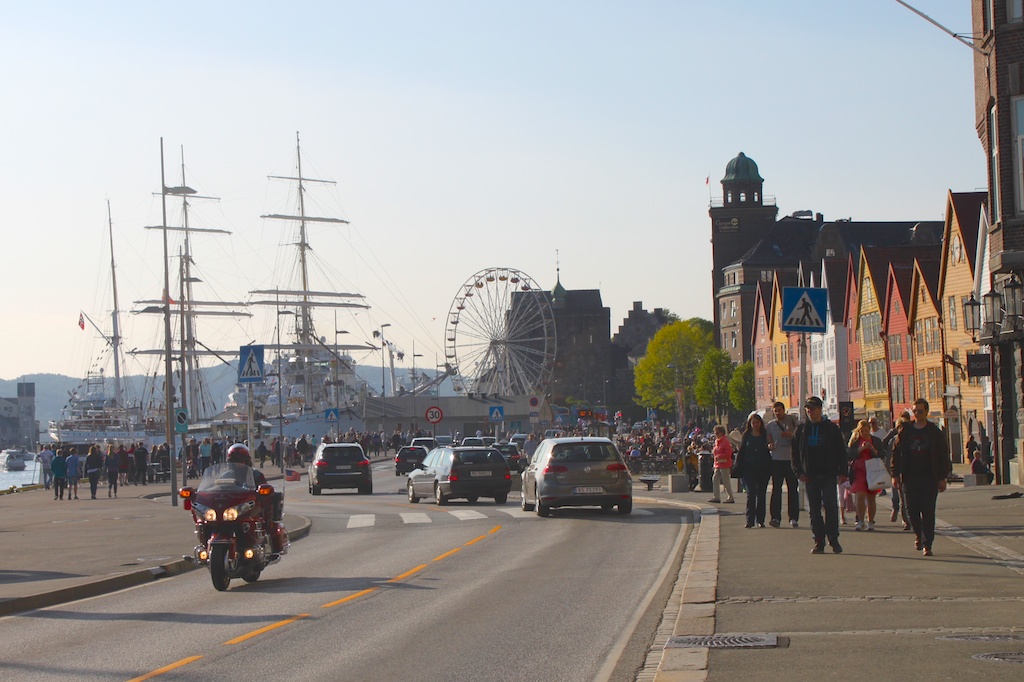
On the whole, the Danes just didn’t show anywhere near the interest that the Norwegians had back in Bergen, which I found a little bit strange considering the relationship between the two nations.
Second Stop: Great Britain

I was one degree and ten minutes away from a Faroese man in Oxford. They get around, I’m finding. I met a Cuban man in my hostel, and when he heard why I was in Europe, he threw up his hands in astonishment. “Seriously?” he asked, “I just found out about that place ten minutes ago! I was talking to this awesome Faroese guy at my conference. This is too weird.”
The British occupied the Faroe Islands during World War II and left behind an airport, a strong tea-drinking tradition and Cadbury chocolate. But the cultural exchange was mostly unilateral, and the rest of my connections to the Faroe Islands on Great Britain were comparative. The apologies the locals made for the changeable weather made me smile that one-upping smile. The sea felt so warm. The houses and gardens looked so fine and pretty, even in the small villages of the Cotswalds and the mountains of Wales. The land just seemed so safe, protected, and fertile compared to what I had come from.
A language geek as ever, Welsh fascinated me. I saw more of it than I expected to — just about everything written was bilingual — but I didn’t hear any of it until I reached northern Wales, where I was happy to hear it spoken much more, and by all generations, in Caernarfon. The scarcity still made me a little bit sad. There, I thought, but for the grace of a thousand kilometers of salt water, or some truly commendable island obstinacy, goes Faroese.
Third Stop: The Isle of Man
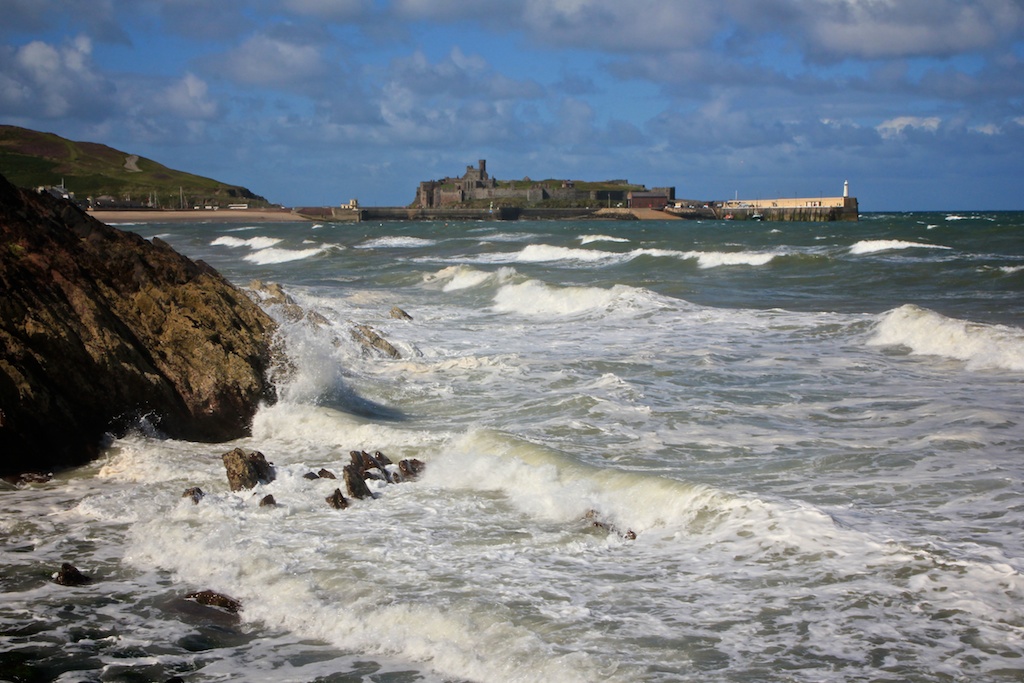
I stayed with a family in the Isle of Man who positively astonished me with their knowledge of the Faroes. They asked me intelligent questions about the political system, showed me an old book with photographs of artist Tróndur Patursson harpooning a whale, and expressed avid concern for the puffin colonies on Mykines.
Now, this family was most likely exceptional in this regard: not only especially intellectually curious but specifically about topics that would pull the Faroe Islands into their view. The two island nations are, after all, linked by many obvious political and cultural parallels, varying degrees of Norse heritage, and, especially intriguing to my host’s father (a part-time ornithologist) large populations of sea birds.
The Isle of Man is much bigger than any of the Faroe Islands, and it’s only the one. It was hard for me to buy, comparatively, the word “isolated” describing any of the Manx settlements. The people of Man have a few towns that could reasonably be called cities, albeit small ones, with multiple pubs and Chinese and Indian carry-outs… and lovely, brooding castles. They’ve also got much larger expanses of flat, fertile land as well as trees and forests. Despite some resistance, English has almost completely overtaken their Manx language.
But when I stood on the shore, the strength of the wind took me by surprise and the crashing surf revealed the fury of the full force of the Atlantic, even on a mild and sunny day. And I thought, yes, these islands are close cousins, after all.
Fourth Stop: Ireland
Once I read a long scholarly article that promised to examine the historic cultural relationship between Ireland and the Faroe Islands. It basically concluded there wasn’t any… and wasn’t that strange? Okay. So I didn’t spend much time looking in that direction.
Irish Gaelic, which seems to be doing okay, gave me yet another reminder of how amazing Faroese is doing for such a small language. For my next visit to Ireland, I think I better head to the Aran Islands, which I was able to glimpse not too far off the coast of the Burren. They’re as Gaelic as Gaelic comes, everyone says — that little bit of saltwater separation having a powerful preservative effect.
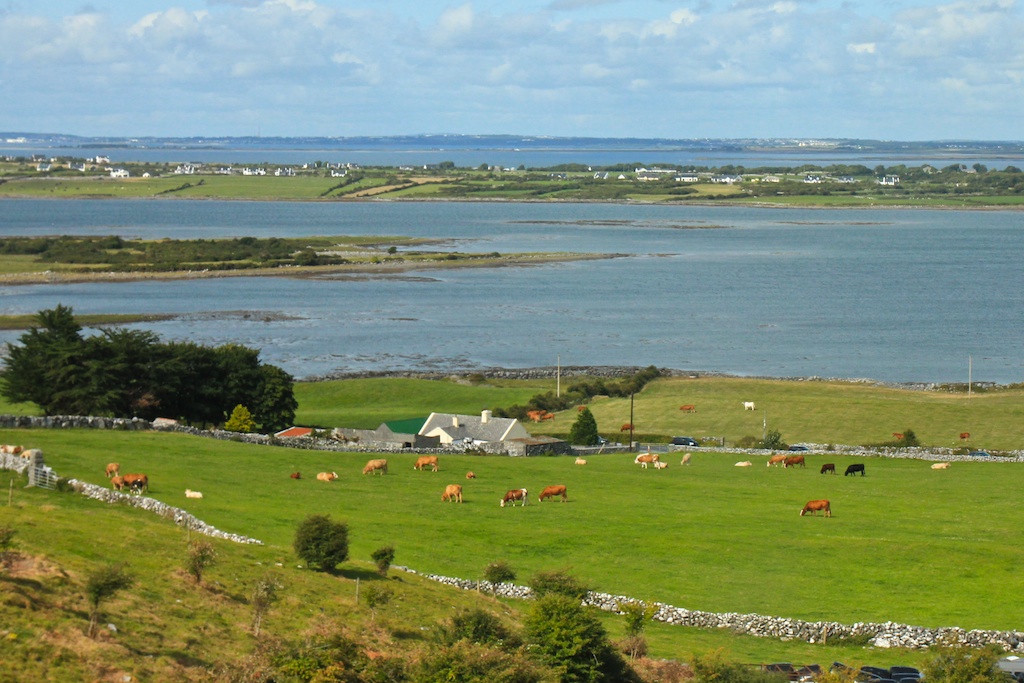
The Irish landscape was broader and flatter and more forested than the Faroese, once again (it doesn’t take much.) To give credit where it’s due, I experienced more changeable weather in Ireland than anywhere else I’ve ever visited, including the Faroes. So many of these Northern European countries tell the same jokes — “If you don’t like the weather, wait five minutes.” But only in Ireland did I really experience, within the hour, sunshine turn to black skies and driving rain and back again.
The Cliffs of Moher, apparently Ireland’s second most visited tourist attraction, were lovely. But I’d seen just as good in the Faroes and not had to share them with hundreds of Chinese and Midwestern American tourists. And the Irish are going around claiming they have the highest sea cliffs in Europe. You can Google it and see.
“As high as the Cliffs of Moher (217m) are,” our guide said proudly, “they are not the highest in Ireland! For that, you’ll have to go to Sliabh Liag (601m), which are the highest sea cliffs in all of Europe!”
Now, I happen to know that the Faroese Cape Enniberg, which also claims that lofty title (they discount Norway’s Hornelen for not being vertical enough for proper cliffs) rises 750 meters above the sea. When I questioned the guide on the matter while the rest of the bus was going to the bathroom, he sort of deflated.
“Maybe my facts are wrong,” I offered. “I’m not very good at remembering numbers.”
“No, no, you’re probably right,” he said. “This is just what we learned in school…”
I doubt he’ll change his rehearsed speech on the matter. After all, how often is someone going to know enough about some little nowhere islands to call him on it?





 Adventures in the Land of Maybe