Tag Archives: Faroes

10 Years Later…

It’s been eighteen years since I first heard of the Faroe Islands. Sixteen years since I found a Faroese friend online and started trying to learn the language. Twelve years since that first magical, snowy visit.

And it’s been ten years — a full decade, somehow! — since I spent a whole summer on the islands, learning Faroese and working on my graduate project for the Missouri School of Journalism. 

My life has changed significantly in the intervening years. I’m now a World Language teacher, and live with my husband in Washington, D.C. 

And I still feel a powerful connection to the Faroe Islands.

I’ve returned several times, seven magical summers: each a happy return, each somehow a little different. I’ve made unforgettable memories at ‘home’ in Gøta and Tórshavn, and gone on marvellous adventures to some of the most remote corners of the islands. One year, my penpal came along from Finland; another year, a dear old friend from grade school. Most recently, my husband finally saw the place I’ve been telling him about for years!

My husband, Nash, and I on a 2022 visit to the Faroe Islands.

The Faroes too have changed, as everything on Earth must. 

It’s 2024, and in many ways, the future has come to the Faroes. Atlantic Airways runs direct flights between New York and the Faroe Islands. The new Hilton Garden Inn in Tórshavn has more than 100 fancy guest rooms.

Eysturoyartunnilin opened in 2020 as the world’s second-longest sub-sea road tunnel, cutting the drive between Tórshavn and Runavík, once a winding hour-plus of following the fjords, to a snappy 20 minute short-cut under the sea. The tunnel even features the world’s first sub-sea roundabout, allowing drivers to exit in Strendur on the other side of Skálafjørður.

As of 2023, Sandoyartunnilin has brought the island of Sandoy into the “Faroese Mainland” that can be driven without a ferry crossing. If all goes well, Sandoy will be a stepping stone for the Suðuroyartunnil that will add Suðuroy, the southernmost and last large unconnected island, to the main Faroese road network. Some proposals even include a quick stop in Skúvoy (population 40) which is among the smallest and most remote islands in the archipelago.

In more personal news, my host family has grown, by three fantastic children, and recently come to visit me in the United States!

My ‘home village’ of Gøta has a new playground, beloved by my Faroese niece-of-sorts. The town-hall, stone picnic table, and riverside path were also pleasant additions to the village landscape. The town-hall has won architectural awards for blending Faroese tradition with modern Nordic design… but it’s also broken the sight-lines down the river to the fjord. And the new footbridge crosses the stream just where I used to leap from stone to stone, where I took a low-vantage-point photo I submitted as part of my graduate portfolio. I can’t take that photo again, nor cross over those stones… but that’s just how life goes. No doubt there were people in the Faroes who mourned the unspoiled mountains when they put in the roads that are now an essential part of life.

More foreigners than ever are now visiting the Faroes. It’s impossible not to have a whirlwind of emotions about that, especially when I’m quite complicit — I’ve encouraged roughly everyone I’ve met in the last decade to travel there. The tourism boom is good for the economy, and for certain facets of the culture. Other traditions are threatened. Debates about access to the Faroese nature, almost all of which is privately held, have pitted neighbors against each other, where once the feeling was that one could walk in the hagi (outfield) without asking any special permission. 

But the Faroe Islands are still Faroese, and I remain utterly enchanted by this strange and wonderful little nation.

As I write this, a strike by multiple labor unions has all of the islands in its grip. The fresh food ran out almost immediately, followed by the gas and diesel, and now even the potatoes, pasta, and frozen food is running low. There’s still dairy though, and fish, and fresh pilot whale from a recent grindadráp in Hvannasund. 

Plus ça change, plus c’est la même chose —

Jú meira tað broytist, jú meira verður tað tað sama.
The Missing “Missing” Women of the Faroe Islands

Faroese Population: 48,228

Of Which Male: 24,937

Of Which Female: 23,291

Difference: 1,646

A quick look at current Fareose demographics reveals an oddity — the country is short on women. Though the gender imbalance has fallen from a 2012 high (when there were over 2,000 more men than women in the country), there’s still a striking and problematic discrepancy, especially when you consider that the missing women are mostly in their twenties and thirties, prime ages for dating and having children.

Media coverage and common sense would have you believe that the Faroe Islands is facing an enormous problem in the near future, as fewer women means fewer babies. Population growth could stagnate or reverse if no incentives are made for the women to come home, or if new women aren’t found elsewhere, such as from Thailand or the Philippines. In other places, gender imbalances are also known for leading to all sorts of sociological ills, such as increased violence against women.

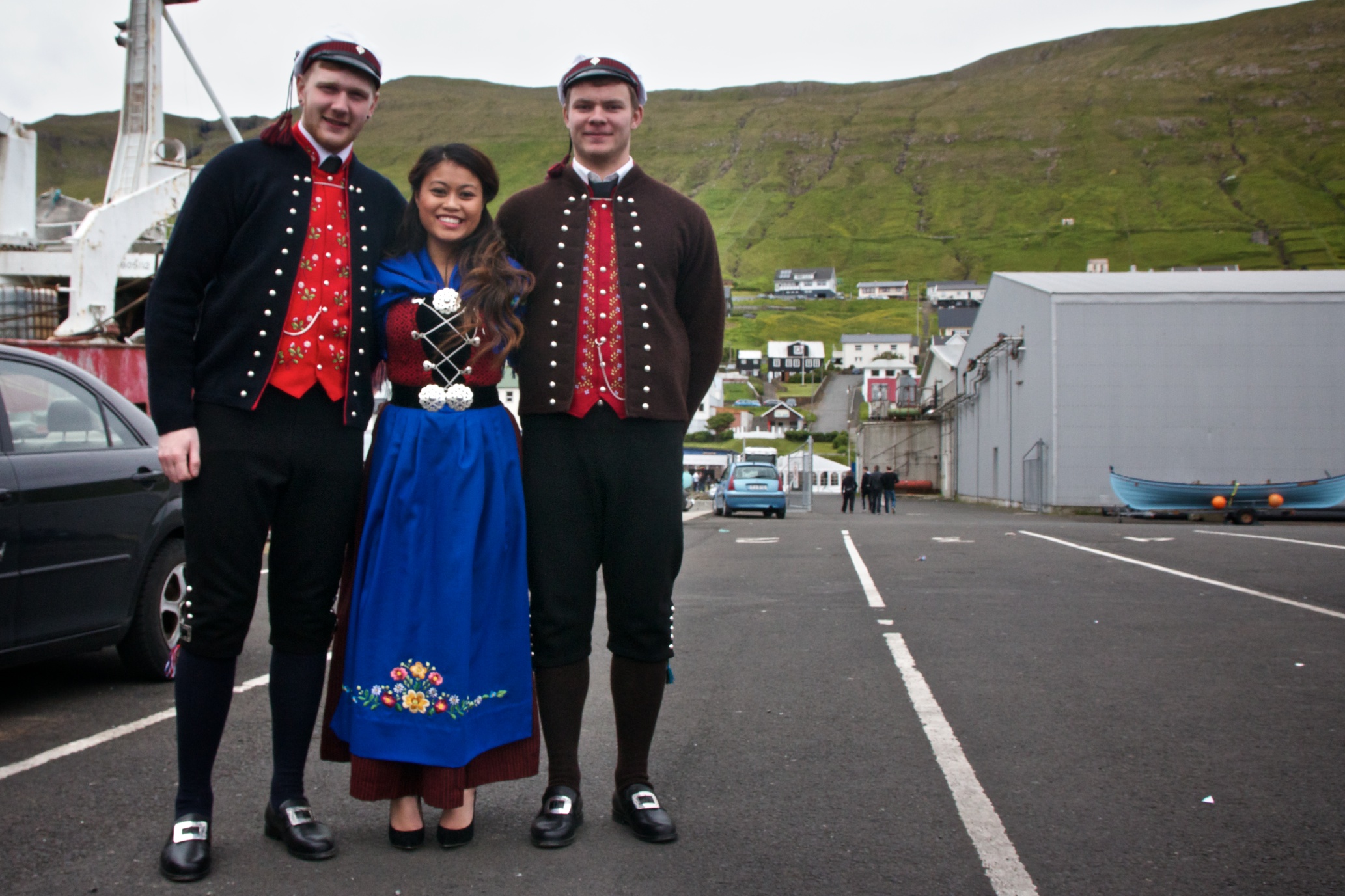
A young Thai-Faroese woman attends the Joansøka festival in Vágur, Suðuroy, with her boyfriend and another friend.

A young Thai-Faroese woman attends the Joansøka festival in Vágur, Suðuroy, with her boyfriend and another friend.

But since coming to the Faroes a month ago, I’ve seen none of that. Okay, so I’ve seen a few ethnically Asian women here and there. Mostly beautiful, with very cute children. And maybe they’re the reason that I can buy coconut milk and curry paste in even the smallest Faroese grocery store. If that’s the case, I’m grateful to them. I have a hard time living on meat and potatoes alone, even smothered in tasty Faroese gravy.

Otherwise, though, the country seems to be missing its ‘missing’ women. Everyone knows where they women have gone — Denmark, mostly — but where are the holes they’ve left behind?

I’m just not seeing many schools shuttering for lack of children, restless single men, women left behind by all their friends and desperate to get away. Yes, everyone knows someone who has “gone down” to Denmark to study or work, and most families have at least one member away across the water, but it’s young men they’re missing, too. And most are hoping to come home to the Faroes in due time.

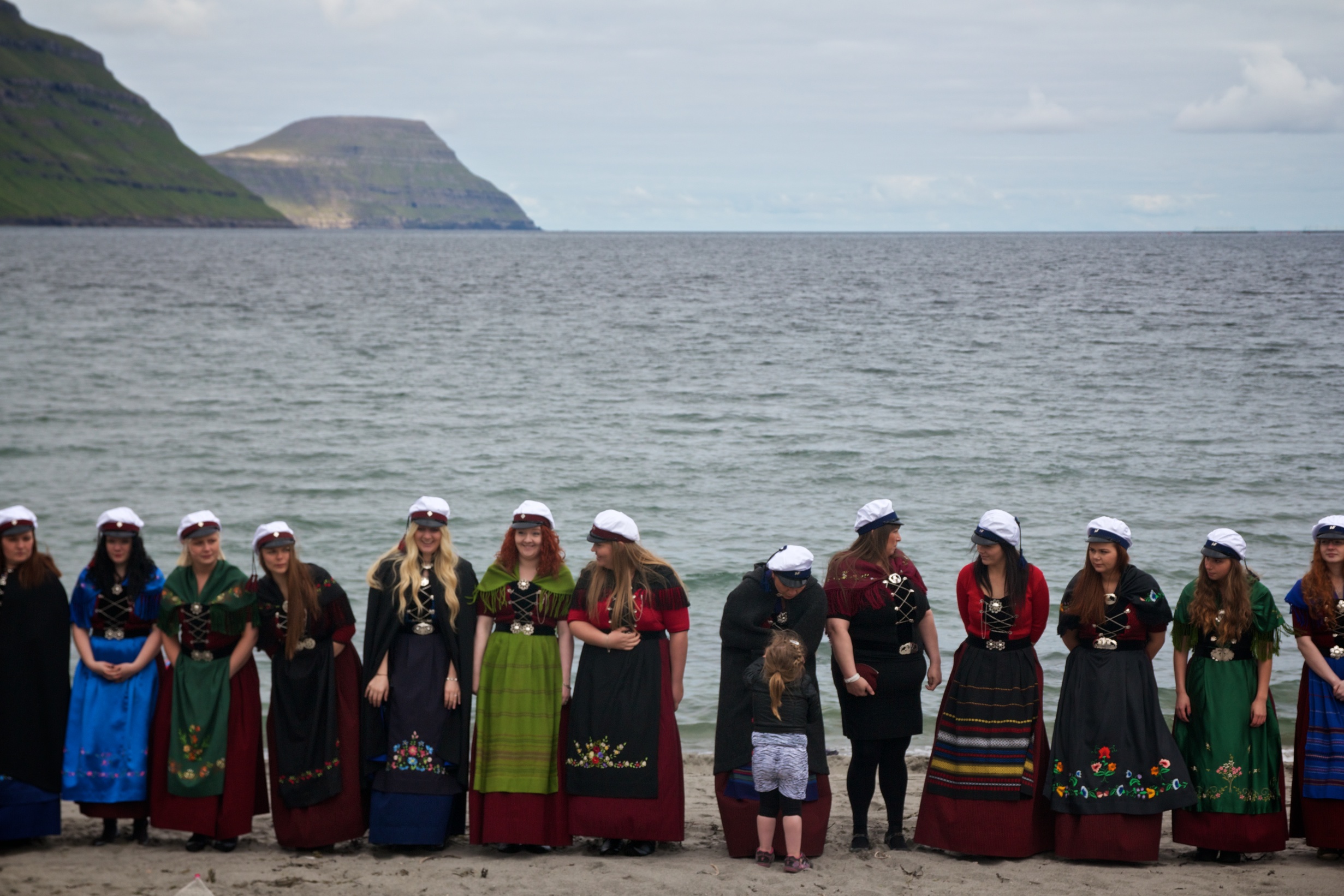
Graduates of the Studentaskúlin (junior college) in Eysturoy gather on the beach in Gøtu as part of their graduation ceremony. This year's graduating class was more than two-thirds female.

Graduates of the Studentaskúlin (junior college) in Eysturoy gather on the beach in Gøtu as part of their graduation ceremony. This year’s graduating class was more than two-thirds female.

Most people I’ve asked about the lack of women know that the issue exists, but in an almost abstract sense. They all know women who have gone abroad, and they understand why — to get certain types of educations, pursue certain careers, to marry foreign men with whom they’ve fallen in love —  but they’re not seeing dramatic effects, and they don’t seem too worried about the future. They don’t believe they’re in a society on the verge of collapse, instead they are optimistic that, despite some problems, things are moving in the right direction.

Take this all “with a grain of salt,” because I still need to do some actual background reporting on this issue, gather statistics and hard facts and talk to the experts. So far, I just have my own observations and those of the many women who have so far made time to talk to me.

“No, no, I don’t see it,” says Bára Joensen, a mother of three who lives in Norðragøta. “The only thing is that some are getting foreign women. But I haven’t really noticed that there are more men.”

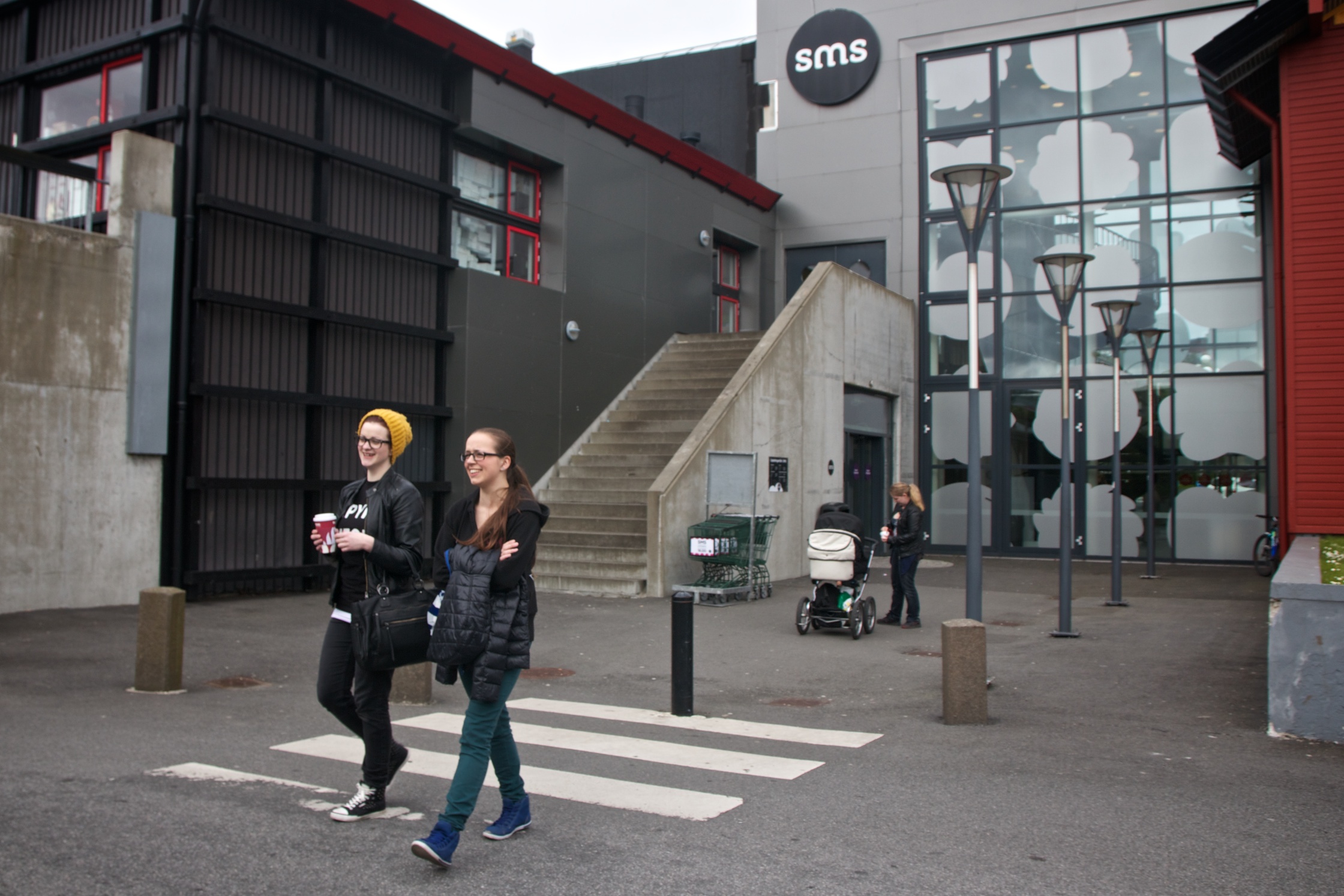
Jóna Venned walks with a friend outside of the SMS shopping center in Tórshavn. Jóna has been abroad to work in Switzerland and travel and visit friends in several other countries. She will leave next year to study in Denmark, but plans to move back home to the Faroe Islands afterward.

Jóna Venned walks with a friend outside of the SMS shopping center in Tórshavn. Jóna has been abroad to work in Switzerland and travel and visit friends in several other countries. She will leave next year to study in Denmark, but plans to move back home to the Faroe Islands afterward.

“I think the circumstances have changed and it is a lot easier to be a woman in the Faroe Islands compared to what it has been. It is kind of conservative, it has always been conservative,” says Jóna Venned, a 24-year-old from Tórshavn. She says the society is continuing to move towards greater equality in homes and workplaces, and that there is also an effort underway to make it easier for single parents to live in the Faroes.